
Common Mistakes After a South Carolina Truck Accident on I‑26 or I‑20
The moments following a collision with a commercial semi-truck at the notoriously congested interchange of I-20 and I-26, often referred to by Columbia locals as “Malfunction Junction,” are characterized by overwhelming confusion. While you focus on your recovery at a facility like Prisma Health Richland Hospital, the trucking company and its insurance adjusters are likely already at work. They understand that in the high-stakes world of commercial litigation, objective data is the most powerful tool available.
Commercial vehicle collisions are fundamentally different from standard car accidents. A fully loaded tractor-trailer navigating the high-speed lanes of I-26 carries a kinetic energy that passenger vehicles simply cannot withstand. When an accident occurs, the resulting physical, emotional, and financial devastation requires a strategic, meticulous response. Unfortunately, the days and weeks following a crash are a minefield of potential missteps.
What Should I Do After a Truck Accident on I-20 or I-26?
Immediately after a truck accident on a South Carolina interstate, secure your safety and call 911 to bring the Highway Patrol to the scene. Request emergency medical personnel to document your condition, and photograph vehicle positions and debris fields before the road is cleared.
Taking specific, deliberate steps in the first hour after a crash is vital for preserving the integrity of your claim. When law enforcement arrives, they will create an official collision report (often referred to as a TR-310), which serves as the primary record of the event. For crashes on major interstates like I-26 or I-77, the South Carolina Highway Patrol is typically the reporting agency, and this document will identify the parties involved, witnesses, and often includes the officer’s preliminary assessment of fault.
While physical evidence provides the “how” and “why” behind a collision, it disappears rapidly on busy thoroughfares. The physical environment of a crash site tells a story that words cannot always capture.
To build a foundation of objective, verifiable evidence, focus on the following steps at the scene:
- Document Skid Marks and Debris: Skid marks on the asphalt are more than just rubber; they are mathematical data points used by accident reconstructionists. These marks can determine the minimum speed of the vehicles involved and the direction of travel. Furthermore, the precise location of broken glass, plastic, and other car parts helps establish the exact “area of impact,” which is frequently a major point of contention in legal disputes.
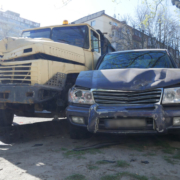
- Photograph Vehicle Damage: The way metal crumples and glass shatters can provide crucial evidence regarding the speed, angle, and force of an impact. Take high-resolution photographs of all visible damage to your vehicle, including close-ups and wider shots, before it is towed from the scene. Documenting your vehicle’s condition is essential before potential repairs or impound lot storage obscures this evidence.
- Identify Witnesses: Getting the names, phone numbers, and addresses of neutral third-party individuals at the scene is critical. Witnesses often disappear once the police or first responders arrive, and their unbiased testimony can be invaluable for confirming your account of the accident. Do not rely solely on the police to secure this information.
Why Is Delaying Medical Treatment a Major Mistake in South Carolina?
Delaying medical treatment after a collision gives insurance carriers the leverage to argue your injuries are unrelated to the crash or entirely pre-existing. Seeking immediate care at local facilities establishes an undeniable medical baseline connecting the trauma directly to the commercial vehicle accident.
Even if you believe your injuries are minor, visiting an emergency department or an urgent care center in West Columbia or Lexington is a necessary step. Medical professionals can identify “hidden” injuries, such as concussions or internal trauma, that may not manifest symptoms immediately. Furthermore, a prompt medical record creates an undeniable link between the accident and your physical condition, preventing insurance companies from claiming your injuries were pre-existing.
Proving that another driver was negligent is only half the battle; you must also prove the extent of the damages you suffered. Your medical evidence begins the moment you arrive at a facility like MUSC Health Columbia Medical Center or Lexington Medical Center. The intake notes, diagnostic images, and the physician’s initial diagnosis form the baseline for your claim.
Many car accident injuries, such as whiplash or traumatic brain injuries, require ongoing treatment. Consistent, documented care is the best way to prove the severity of your condition. Gaps in treatment are a major red flag for insurance adjusters. If you miss physical therapy sessions at clinics in the Northeast Columbia or Irmo areas, the insurance company will argue that you aren’t truly hurt.
How Does Failing to Preserve Black Box Data Ruin a Truck Accident Claim?
Failing to send a formal spoliation letter allows a trucking company to place the vehicle back into service, potentially overwriting critical Event Data Recorder information. This black box data contains irrefutable electronic evidence of the truck’s speed and braking activity in the seconds before impact.
In the legal and insurance fields, the term “black box” typically refers to an Event Data Recorder (EDR). This device is integrated with the vehicle’s engine control module and triggers a data snapshot during a critical event, such as sudden deceleration or a sharp turn. This data is invaluable because it cannot be argued with; it provides a cold, hard look at exactly what the vehicle was doing at the moment of impact.
The data captured is exhaustive and can include:
- Vehicle Speed: The exact speed of the truck in the crucial five to ten seconds immediately preceding the collision, which helps determine if excessive speed was a contributing factor, and calculates the potential stopping distance required for the fully loaded vehicle.
- Braking Activity: Detailed information on whether the driver engaged the brakes, the force and duration of the application, and the precise moment of engagement relative to the impact. This data is critical for reconstructing the accident and assessing the driver’s reaction time and whether they attempted to slow down effectively.
- Throttle Position: Data indicating the position of the accelerator pedal, whether the driver was actively accelerating, or if the cruise control system was active and maintaining a set speed. This helps establish if the driver was operating the vehicle safely or potentially contributing to the accident through poor speed management.
- Steering Input: The specific angle and rate of change of the steering wheel, which reveals if the driver attempted any evasive maneuvers or if the vehicle was drifting out of its lane due to driver inattention. Analyzing steering data can prove whether a last-minute swerve was made to avoid a collision or if the driver simply failed to maintain control of the commercial vehicle.
If you suspect the truck driver was speeding, you must immediately secure the vehicle’s black box data through a formal spoliation letter to prevent the trucking company from overwriting or destroying the evidence. This letter legally demands that the subject truck be taken out of service and that the EDR data be preserved in its raw format. Without immediate legal intervention, the trucking company can delete or overwrite black box data through the simple act of putting the truck back into service.
How Can Understanding Modified Comparative Negligence Protect Your Claim?
South Carolina operates under a modified comparative negligence system, meaning your compensation is reduced by your percentage of fault. If an adjuster successfully shifts more than fifty percent of the blame onto you for the accident, you are barred from recovering any financial damages.
Trucking companies and their defense teams understand this law intimately, and they will use it to minimize their financial exposure. For instance, if a collision occurs on a busy stretch of Two Notch Road, a truck driver might claim they were traveling at the posted speed limit and that you suddenly cut them off.
This is where objective evidence becomes the foundation for proof, as it removes much of the guesswork from accident reconstruction. By extracting black box data, you might reveal that the truck was traveling 10 mph over the limit and that the driver did not apply the brakes until a fraction of a second before impact. This objective evidence can directly contradict the driver’s testimony and establish a clear case of negligence, such as speeding or distracted driving.
Additionally, we meticulously compare the digital data retrieved from the black box with the physical evidence documented by law enforcement at the accident scene. Matching vehicle speed with the length and nature of skid marks on the pavement near major local arteries like Harbison Boulevard or Broad River Road ensures a consistent and irrefutable narrative of negligence.
What Happens If You Accept a Fast Settlement Offer?
Accepting a fast settlement offer from a trucking company requires you to sign a release of liability, permanently closing your case. These initial offers rarely account for future medical care, ongoing physical therapy, or the long-term loss of earning capacity caused by severe injuries.
To recover the money you’ve lost, you must provide a clear paper trail. The final piece of the evidentiary puzzle is quantifying how the accident changed your life. Damages refer to the financial, physical, and emotional toll the accident took on your life. Without thorough medical documentation, an insurance carrier will likely offer a settlement that covers only a fraction of your actual needs.
A comprehensive settlement must account for two distinct categories of loss:
- Economic Damages: This includes every invoice from the hospital, ambulance service, and pharmacy. It also encompasses documentation from your employer showing the hours you missed and the pay you lost while recovering, as well as the cost of future medical treatments, rehabilitation, and lost earning capacity.
- Non-Economic Damages: These cover pain and suffering, loss of enjoyment of life, and emotional distress. If you can no longer take your children to Riverbanks Zoo or participate in local community events because of chronic back pain, or if you suffer from anxiety, depression, or PTSD following the traumatic accident, those are real and significant losses that deserve compensation.
We work with vocational experts to calculate your lifetime loss of income if your injuries prevent you from returning to your previous career. Never sign a release form before understanding the full, lifetime impact of the collision on your physical and financial well-being.
Why Is Posting on Social Media After a Midlands Truck Crash Harmful?
Posting about your life on social media provides defense attorneys with ammunition to minimize your injuries. An innocent photo taken locally or a simple comment claiming you feel fine can be taken out of context to argue that your physical limitations are exaggerated or fabricated.
In the modern era, some of the most compelling evidence isn’t found on the pavement, but in the digital world. Just as a legal team aggressively pursues electronic data to evaluate a driver’s behavior, defense attorneys will aggressively pursue your digital footprint.
Insurance adjusters routinely monitor the public profiles of accident victims. Even if your settings are private, friends or family members might tag you in posts or photos. A picture of you smiling at a family gathering in Rosewood or Forest Acres can be presented to a jury as “proof” that your claims of emotional distress or chronic pain are unsubstantiated.
The most prudent course of action is to suspend your social media activity entirely while your claim is pending. Do not discuss the accident, do not post updates about your medical treatment, and politely ask friends and family to refrain from posting photos of you.
Protecting Your Financial Future After a Midlands Truck Accident
The discovery that you have been injured by a negligent commercial driver is a life-altering event. Between the physical pain of recovery and the financial pressure of mounting bills, it is easy to feel overwhelmed. The team at Peake & Fowler is deeply committed to the residents of Columbia, Lexington, and the surrounding Midlands. We know the roads of Columbia, we know the local courts, and we know how to hold negligent drivers and their insurance companies accountable.
If you or a loved one has been involved in a collision with a commercial vehicle, contact us at 803-788-4370 or visit our office in Columbia to discuss your situation with an experienced legal team. We handle the investigations, the paperwork, and the negotiations so that you can focus on what matters most: your health.