Blind Spot Accidents Involving Large Trucks: Proving Driver Negligence in South Carolina
Driving on South Carolina’s major highways, like I-26, I-95, or I-77, means sharing the road with large commercial trucks. While these vehicles are essential to our economy, they also present unique dangers to passenger cars. The sheer size and weight of a fully loaded tractor-trailer can lead to devastating consequences in a collision.
One of the most common and perilous scenarios involves the truck’s blind spots, often called “No-Zones.” These are large areas around the vehicle where the driver’s visibility is zero. A simple lane change by the trucker can become a life-altering event for a motorist traveling within one of these areas.
What Are a Truck’s “No-Zones” or Blind Spots?
Unlike a standard passenger car, which has relatively small blind spots easily checked with a quick turn of the head, a semi-truck is surrounded by massive areas of zero visibility. A truck’s height, length, and lack of a rear-view mirror create these dangerous “No-Zones.” It is a common misconception that because truck drivers sit so high up, they can see everything on the road. The reality is quite the opposite.
For motorists in South Carolina, it is important to be aware of these four primary No-Zones:
- Directly in Front: The area extending about 20 feet in front of the truck’s cab is a blind spot. If a car cuts too closely in front of a semi, the driver may not see it and will not have adequate time to stop.
- Directly Behind: The blind spot directly behind the trailer can stretch for approximately 30 feet. Truckers have no way of seeing a vehicle tailgating them or following too closely within this zone.
- The Left Side (Driver’s Side): While smaller than the blind spot on the right, a significant blind spot exists on the driver’s side. It generally runs alongside the cab and extends out one lane.
- The Right Side (Passenger’s Side): This is the largest and most dangerous blind spot. It can extend across two full lanes of traffic and runs nearly the entire length of the trailer. A passenger vehicle can easily disappear from the driver’s view in this area, making lane changes to the right extremely hazardous.
Why Do Blind Spot Accidents Happen So Often?
Blind spot accidents, or “No-Zone” collisions, are unfortunately common. While any driver can make a mistake, federal regulations hold commercial truck drivers to a higher standard of care due to the risks they pose. These accidents often stem from a failure to adhere to safe driving practices.
Common reasons these collisions occur include:
- Improper Lane Changes: The trucker fails to signal, check mirrors adequately, or perform a visual sweep before merging or changing lanes.
- Driver Inattention: Distractions like using a cell phone, adjusting the GPS, or eating can pull a driver’s focus away at a pivotal moment.
- Driver Fatigue: Federal Hours of Service regulations exist to prevent drowsy driving, but violations are common. A tired driver has slower reaction times and impaired judgment.
- Inadequate Training: The trucking company may have failed to provide sufficient training on how to manage blind spots and safely navigate traffic.
- Aggressive Driving: Speeding or making abrupt maneuvers increases the risk of a collision, as it gives other drivers less time to react and stay out of No-Zones.
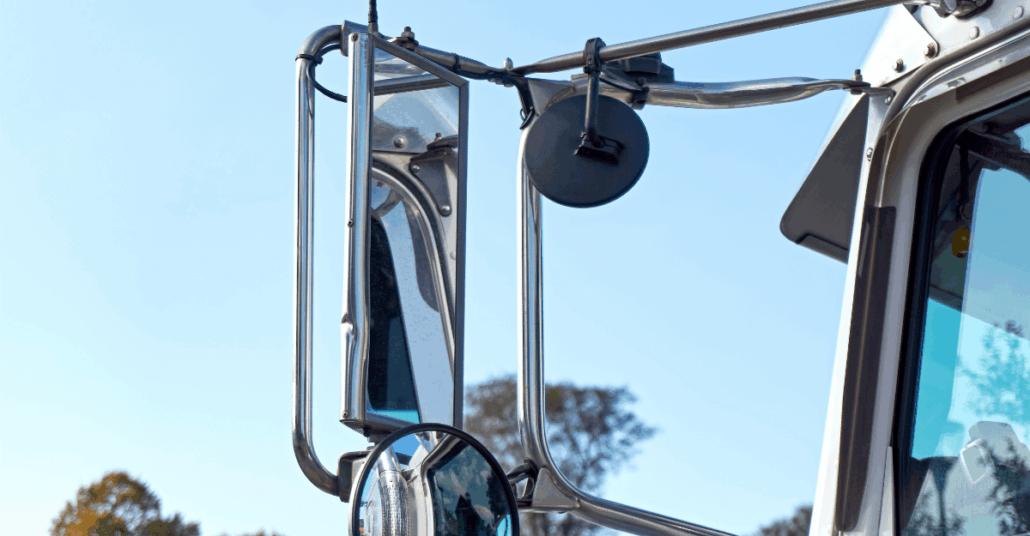
- Poorly Maintained Equipment: Defective or improperly positioned mirrors can limit a driver’s field of vision even further.
What Types of Injuries Result from Truck Blind Spot Crashes?
The immense weight and force of a tractor-trailer mean that when it collides with a much smaller passenger car, the resulting injuries are often catastrophic. Occupants of the smaller vehicle almost always bear the brunt of the impact, which can lead to permanent disability or death.
Injuries frequently sustained in these accidents include:
- Traumatic Brain Injuries (TBI): The violent force of the crash can cause the brain to impact the skull, leading to long-term cognitive, physical, and emotional impairments.
- Spinal Cord Damage: Damage to the vertebrae or spinal cord can result in partial or complete paralysis, forever changing a person’s life.
- Internal Organ Damage and Bleeding: The crushing force can cause severe harm to internal organs, often requiring emergency surgery.
- Multiple Bone Fractures: It is common for victims to suffer breaks in their arms, legs, ribs, and pelvis.
- Amputations: Limbs can be crushed beyond repair, necessitating amputation.
- Wrongful Death: Tragically, many blind spot accidents are fatal, leaving families to cope with immense grief and financial uncertainty.
Who Is Liable for a Commercial Truck Blind Spot Accident?
Determining liability after a semi-truck accident is more complex than in a typical car wreck. While the truck driver’s actions are often the direct cause, other parties may also bear legal responsibility for the collision. Identifying all potentially liable parties is a key step in ensuring you can recover full compensation for your losses.
Potentially responsible parties may include:
- The Truck Driver: If the driver acted negligently by failing to check their blind spots, driving while distracted, or violating traffic laws, they can be held personally liable.
- The Trucking Company (Motor Carrier): Under a legal principle known as “vicarious liability,” employers are often responsible for the actions of their employees. Additionally, the company can be directly negligent if it engaged in practices like negligent hiring (e.g., hiring drivers with poor safety records), providing inadequate training, or pressuring drivers to violate Hours of Service rules.
- The Truck Manufacturer: If the accident was caused or made worse by defective parts, such as faulty mirrors or a failed braking system, the manufacturer could be held liable.
- A Maintenance Provider: If a third-party company was responsible for the truck’s maintenance and failed to properly service safety equipment, that company could be at fault.
How Do You Prove Negligence in a South Carolina Blind Spot Claim?
To win a truck accident claim, you and your attorney must prove that another party was negligent and that their negligence caused your injuries. Trucking companies and their insurance carriers have teams of investigators and lawyers who start working immediately to minimize their liability. They often try to shift blame to the victim by claiming the passenger car was driving erratically or lingering in the blind spot. Overcoming these tactics requires gathering strong evidence.
Key evidence used to establish fault in a blind spot accident includes:
- Police Accident Report: This report contains the responding officer’s initial findings, diagrams of the scene, witness information, and any citations issued.
- Electronic Data Recorder (EDR): Often called the “black box,” this device records critical data about the truck’s operation, such as speed, braking, steering inputs, and engine RPMs in the moments before impact.
- On-Board Cameras (Dash Cams): Many commercial fleets now use inward and outward-facing cameras that can provide indisputable visual evidence of how the accident occurred.
- Witness Testimony: Independent eyewitnesses who saw the truck’s movements before the crash can provide powerful testimony to counter the truck driver’s version of events.
- The Driver’s Records: This includes their driving history, employment file, training logs, and any history of drug or alcohol violations. This information can reveal patterns of unsafe behavior.
- Truck Maintenance Records: These logs can show whether the truck’s mirrors and other safety equipment were properly maintained and compliant with federal regulations.
- Accident Reconstruction Professionals: Knowledgeable professionals can use physical evidence from the scene and vehicle data to scientifically reconstruct the accident, demonstrating how the collision happened and who was at fault.
What Compensation Can Be Recovered After a Blind Spot Collision?
A serious truck accident can generate enormous costs, from medical bills to lost income. The goal of a personal injury claim is to recover financial compensation, known as damages, to cover these losses. A successful claim can help you and your family regain financial stability.
Damages in a South Carolina truck accident case may include:
Economic Damages: These are tangible financial losses that can be calculated.
- All past and future medical expenses
- Lost wages and income from time missed at work
- Loss of future earning capacity if you cannot return to your previous job
- Costs of rehabilitation and physical therapy
- The cost to repair or replace your vehicle
Non-Economic Damages: These are intangible losses related to the human cost of the accident.
- Pain and suffering
- Emotional distress and mental anguish
- Loss of enjoyment of life
- Scarring and disfigurement
- Loss of consortium (for the impact on a marital relationship)
What Are the First Steps to Take After a Truck Blind Spot Accident?
The chaos following a collision with an 18-wheeler can be overwhelming. What you do in the moments, days, and weeks after the crash can have a significant impact on your health and your ability to pursue a legal claim.
If you are involved in a blind spot accident, try to take the following steps:
- Report the Accident and Get Medical Help: Call 911 immediately. A police report creates an official record of the crash, and seeking prompt medical attention is vital for your health and for documenting your injuries.
- Document Everything at the Scene: If you are physically able, take photos and videos of the accident scene from multiple angles. Capture the position of the vehicles, the damage to both your car and the truck, any skid marks, and the weather and road conditions.
- Gather Information: Get the truck driver’s name, contact information, insurance details, and the name of their employer (the motor carrier). Also, note the truck number and license plate.
- Identify Witnesses: Ask anyone who stopped if they saw the crash and get their names and phone numbers. Their statements can be invaluable.
- Be Careful What You Say: Do not apologize or admit any fault to the truck driver, police, or insurance adjusters. Stick to the facts of what happened.
- Do Not Sign Anything: Do not sign any documents from an insurance company or accept a quick settlement offer without first speaking to a lawyer.
Get Started Today with Peake & Fowler
If you or a loved one has been injured in an accident involving a truck’s blind spot, it is important to understand your legal rights. The team at Peake & Fowler is here to help you navigate the complexities of your claim and fight for the full compensation you deserve. Your focus should be on your recovery; let us handle the legal burdens.
Contact us online or call us at 803-788-4370 to set up a time to talk about your legal options now.