What Is an FR-10 Form and Who Fills It Out After a South Carolina Car Accident
An FR-10 form is the insurance verification form a South Carolina law enforcement officer hands you after a collision, and your insurance company completes the coverage portion before the form goes to the South Carolina Department of Motor Vehicles. You are responsible for making sure it gets there within 15 days.
Drivers rear-ended on Assembly Street or caught in a chain-reaction wreck at Malfunction Junction are usually focused on the tow truck and the emergency room, not on a half-sheet of paper the trooper handed them through the window. That paper matters. Missing the deadline attached to it can cost you your license and your registration even when you were fully insured and completely blameless for the crash.
What Is an FR-10 Form in South Carolina?
An FR-10 is South Carolina’s written insurance verification request. An investigating officer issues it at the scene of a reportable collision, and it asks one question: did the vehicle carry liability coverage at the moment of the crash? The completed form tells the SCDMV whether each driver met the state’s financial responsibility requirements.
The form exists because South Carolina enforces mandatory liability insurance through verification rather than trust. Under S.C. Code Ann. § 56-9-350, an officer investigating a qualifying wreck “must” furnish this written request form to the operator or owner of each vehicle involved. The statute treats the form as the state’s proof of coverage, not as a courtesy.
The FR-10 is a small document that does a large job. It identifies the drivers, the vehicles, the date and location of the collision, and the insurance carrier each driver names at the scene. Once verified, it closes the loop on whether an uninsured vehicle was on a South Carolina road that day.
Who Fills Out the FR-10 Form After a Collision?
Three parties touch an FR-10. The investigating officer completes the accident and vehicle identification section and hands you the form. Your insurance company or agent completes and verifies the coverage section. You, as the operator or owner, are legally responsible for making sure the verified form reaches the SCDMV on time.
That division of labor trips up a lot of drivers. People assume the officer files the form, or that the insurance company handles everything once it is notified of the claim. Neither assumption is safe. Section 56-9-350 places the return obligation on “the operator or owner” of the vehicle, which means the legal consequence of a form that never arrives lands on you.
Here is how the responsibility breaks down in practice:
- The investigating officer: Completes the identifying information and delivers the form to you at the scene, or as soon after the accident as possible.
- Your insurance agent or carrier: Confirms that a liability policy covering the vehicle was in force on the date of the crash and verifies the form in the manner the statute requires.
- You, the driver or vehicle owner: Deliver the form to your insurer promptly and confirm that the verified form actually reached the SCDMV before the deadline runs.
Many carriers now transmit verification to the SCDMV directly, which often removes the mailing step. That convenience is not a substitute for following up. A claim number is not confirmation that your FR-10 was filed, and agents handling dozens of Midlands collisions a week occasionally let one slip.
When Does an Officer Have to Give You an FR-10?
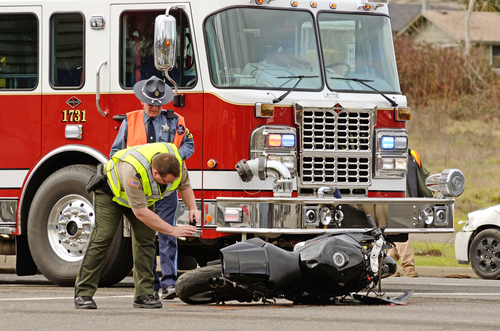
An officer must furnish the form when a collision causes bodily injury, death, or property damage of $400 or more. Because $400 in damage is a low threshold in modern repair costs, nearly every investigated wreck in Richland and Lexington Counties qualifies, including minor parking lot impacts and low-speed rear-end collisions.
The $400 figure comes straight from Section 56-9-350 and has not kept pace with vehicle repair costs. A cracked bumper cover and a sensor recalibration on a late-model sedan clears that threshold easily. If a trooper or a Columbia police officer worked your crash scene, assume an FR-10 was issued and that a copy belongs to you.
You should also expect the form when an ambulance responds. Any collision involving injury triggers a separate obligation under S.C. Code Ann. § 56-5-1260 to notify law enforcement immediately, and an investigated injury crash will generate the insurance verification request as a matter of course.
How Long Do You Have to File the FR-10 With the SCDMV?
You have 15 days from the date the officer delivered the form. Section 56-9-350 requires that the completed and verified form be returned to the South Carolina Department of Motor Vehicles within 15 days from the date of delivery, not 15 days from the date you contacted your insurance company or opened a claim.
That distinction matters more than it sounds. The clock starts at the roadside. If you spent four days in the hospital and another three arranging a rental car before calling your agent, half the window is already gone. Injured drivers recovering from surgery at Prisma Health Richland Hospital routinely discover the deadline after it has expired.
Two practical habits protect you. Photograph the FR-10 with your phone before you leave the scene, since the paper copy tends to disappear into a glove box or a pile of hospital discharge paperwork. Then call your insurance agent within 48 hours and specifically ask them to verify and submit the FR-10, using those words rather than simply reporting the accident.
What Happens if You Do Not Return the FR-10 on Time?
Failure to return a properly verified FR-10 is prima facie evidence that the vehicle was uninsured. The SCDMV can then move to suspend your driver’s license, your license plate, and your vehicle registration, even if you carried valid liability coverage on the day of the collision and had nothing to do with causing it.
“Prima facie evidence” is a legal shortcut. It means the state does not have to prove you were uninsured. The missing form does that work, and the burden shifts to you to come forward with proof that coverage existed. Innocent drivers lose driving privileges over paperwork every year in South Carolina for exactly this reason.
The suspension machinery sits in Title 56, Chapter 9 of the South Carolina Code. The SCDMV moves to suspend licenses and registrations after a reportable accident unless the driver demonstrates financial responsibility, and an owner who actually had a liability policy in effect at the time of the accident falls within a statutory exception. Proving you fit that exception after a suspension has issued takes considerably more effort than returning the form would have.
What if No Officer Investigated Your Accident?
When no law enforcement officer investigates, no one issues you an FR-10, but your reporting duty does not disappear. Under South Carolina law, the operator or owner must forward a written report and verification of liability insurance coverage directly to the SCDMV within 15 days when the accident caused injury, death, or apparent property damage of $1,000 or more.
This is the scenario that catches drivers who handle a fender bender privately. Two motorists exchange information in a Harbison-area parking lot, agree to settle it between themselves, and never call the police. If the apparent damage reaches $1,000, S.C. Code Ann. § 56-5-1270 still requires a report and insurance verification within 15 days.
Note the difference in thresholds. An officer-issued FR-10 is triggered at $400 in property damage, while the self-reporting duty for an uninvestigated crash is triggered at $1,000. When the other driver’s story changes a week later and a claim appears, a driver who skipped the filing is in a materially worse position than one who complied.
How Is the FR-10 Different From the Police Collision Report?
The FR-10 and the collision report are separate documents serving separate purposes. The FR-10 verifies insurance coverage for the SCDMV. The officer’s collision report records how the crash happened, including diagrams, statements, citations, and the officer’s assessment of contributing factors. Insurance adjusters and attorneys rely heavily on the second document.
Drivers frequently mistake one for the other, in part because both are handed out or referenced at the scene. The FR-10 is the short insurance verification request that has a 15-day clock attached. The collision report is the longer investigative document the officer prepares afterward, and it generally becomes available through the South Carolina Department of Public Safety within a few days to a couple of weeks.
Both matter to an injury claim, for different reasons:
- The FR-10 protects your driving privileges and establishes that your vehicle was insured on the date of the collision.
- The collision report documents the mechanics of the crash and often identifies the at-fault driver, witnesses, and any citations issued.
- Together they confirm that coverage exists and identify whose coverage should respond to the damages.
Does the FR-10 Affect Your Injury Claim in South Carolina?
The FR-10 does not decide fault or determine what your injury claim is worth, but it shapes the practical landscape of your case. It confirms whether the at-fault driver carried liability coverage, which determines whether you pursue that policy or turn to your own uninsured motorist coverage for compensation.
South Carolina requires minimum liability limits of $25,000 for bodily injury to one person, $50,000 per accident, and $25,000 for property damage under S.C. Code Ann. § 38-77-140. Those minimums evaporate quickly against a spinal fusion or a multi-day hospital admission, which is why confirming coverage early changes how a claim is built.
An at-fault driver whose FR-10 comes back unverified is a signal worth acting on immediately. It suggests the other vehicle may have been uninsured, and it moves your uninsured motorist coverage to the center of the claim. Your own share of responsibility still governs what you can collect.
What Should You Do with Your FR-10 After a Columbia Car Accident?
Treat the FR-10 as a deadline document, not a receipt. Photograph it at the scene, deliver it to your insurance agent within a few days, ask in writing for confirmation that the verified form was submitted to the SCDMV, and keep a copy of everything for your own records and for your attorney.
A short sequence handles it:
- Photograph the form at the scene, front and back, including the officer’s name and the date of delivery.
- Contact your insurance agent within 48 hours and ask specifically for the FR-10 to be verified and submitted, not simply for a claim to be opened.
- Request written confirmation, by email or through your carrier’s portal, that the form was transmitted to the SCDMV.
- Save the photograph, the confirmation, and any correspondence with your carrier in one place.
- Give a copy to your attorney at the first consultation, since it establishes coverage and the date the clock started.
If a suspension notice arrives despite your efforts, do not ignore it. Suspensions based on a missing FR-10 can often be addressed by producing proof that a liability policy was in force on the date of the collision, but the process moves faster when it starts early.
Contact Peake & Fowler for a Free Car Accident Consultation
A collision reorders your week into insurance calls, repair estimates, and medical appointments, and a form with a 15-day deadline is easy to lose in that shuffle. Losing your license over it, while you are already hurt and already out of a vehicle, compounds an injury that was never your fault to begin with.
Our attorneys at Peake & Fowler handle car accident claims throughout Columbia, Richland County, Lexington County, and the surrounding Midlands. We help injured clients sort out FR-10 filings and SCDMV suspension notices, obtain the collision report, identify every applicable liability and uninsured motorist policy, and deal with the adjusters so that our clients can concentrate on medical treatment.
Call our office to schedule a free, confidential consultation about your South Carolina car accident.
Frequently Asked Questions
Is the FR-10 form the same thing as a police accident report?
No. The FR-10 is a short insurance verification request that confirms whether a vehicle carried liability coverage on the date of the collision, and it carries a 15-day filing deadline. The police collision report is a separate investigative document describing how the crash occurred, including diagrams, witness information, and any citations the officer issued.
What happens if the other driver never returns their FR-10?
Under South Carolina law, an unreturned FR-10 is prima facie evidence that the vehicle was uninsured, and the SCDMV can suspend that driver’s license and registration. For your injury claim, it is an early warning that the at-fault driver may have had no liability coverage, which typically shifts the focus to your own uninsured motorist benefits.
Can I still file the FR-10 if I lost the form the officer gave me?
Yes. Contact your insurance agent immediately and explain that an FR-10 was issued at the scene, giving them the collision date, location, and investigating agency. Your carrier can usually verify coverage for that date and address the filing with the SCDMV. Acting quickly matters, because the 15-day period runs from the date the officer delivered the form.
Do I need an FR-10 if the accident happened on private property?
It depends on whether an officer investigated and on the extent of the damage. If law enforcement responded and the collision caused injury or property damage of $400 or more, the officer is required to furnish the form. When no officer investigated, South Carolina law still requires a report and insurance verification for crashes causing injury or apparent property damage of $1,000 or more.
Will filing an FR-10 raise my insurance rates?
The FR-10 itself is a coverage verification, not a finding of fault, and returning it is a legal obligation rather than an admission of anything. Premium decisions rest with your carrier and generally turn on the claim and fault determination, not on the verification form. Failing to return it, by contrast, can produce an uninsured designation that carries its own financial consequences.
How long does the SCDMV suspension last if my FR-10 was never filed?
A suspension of this type generally remains in effect until the driver establishes that liability coverage was in force on the date of the collision and satisfies the SCDMV’s reinstatement requirements, including the applicable fee. The timeline depends on how quickly acceptable proof of coverage is produced, so addressing the notice immediately usually shortens the period without driving privileges.
Do I need a lawyer just to handle an FR-10 form?
Many drivers resolve the filing themselves with one phone call to their insurance agent. Legal help becomes valuable when a suspension notice has already issued, when the at-fault driver appears to be uninsured, or when you were injured in the collision. In those situations, the FR-10 is one piece of a larger claim that benefits from experienced handling.